
Child Proofing your home is essential to keeping your baby safe… Here are some important tips.
Child Proofing your home is essential to keeping your baby safe… Here are some important tips.
Written by Realty Times Staff on Tuesday, 20 January 2015 1:53 pm
Depending on your desired area of residence, budget and personal preferences, searching for a new place to call home can be tedious. Whether it be an apartment, condo, townhouse or single-residence you’re in the market for, including close family and friends in your search can alleviate some of the stress associated with the process. But, if you live in a different city, you can still include your friends via technology.
Start a Blog
 Start with a comprehensive wish list of features you’re looking for in your next home. This will serve as a guide to others, outside of your realtor, who can provide information on properties that may best suit your needs.
The next series of posts can be similar to diary entries, detailing your experiences, likes and dislikes at each property. Publishing your thoughts on each property can be useful when it’s time to narrow down your options. Plus, your friends can better help you make the final decision this way.
To wrap things up, publish a post revealing your final decision so those involved in the process can see which property you decided to go with. After all, a big-reveal blog post is much more exciting than a generic text message. Also, use this as an opportunity to thank those who helped you make your decision.
Once you’re all settled in, post pictures to show off the new place you call home.
Designate a Hashtag
If Twitter is more your style than a blog, create your own customized hashtag to discuss your house hunting with your friends. Your designated hashtag will help filter out irrelevant tweets and create patterns so that you never miss a moment of the conversation. And, just like with a blog, you can post pictures, information and feelings about each property so that your friends are included in the experience and can help you make a smart decision.
 Create Virtual Tours
Once you’ve narrowed down your selections, it’s fairly simple to create a virtual tour using pictures or videos. All you need to do is embed the hyperlinks into an email message and hit send, leaving it up to the recipients to browse the pictures at their own convenience. But, if you really want to give them an up close and personal view of the property,use your tablet to connect with them on Google Hangouts, Skype or Facetime. This way you can take them on a guided tour and talk to them while you’re at the property. Friends and family will be able to get a complete feel of the property and give you honest feedback since pictures sometimes miss important details.
Overall, your friends and family can help you make a wise decision. By using technology, you can track all the important details and keep everyone in the loop.
Congress Renews TRIA Through 2020
Both the House and Senate have passed H.R. 26, the Terrorism Risk Insurance Program Reauthorization Act of 2015. The bill has been sent to the White House for signature by President Obama into law. This follows strong advocacy efforts by NAR in support of reauthorization, including many visits to Congressional offices, letters to both the House and Senate, and participation as a steering committee member in the Coalition to Insure Against Terrorism (CIAT). H.R. 26 renews the Terrorism Risk Insurance Program for six years, keeping it alive through 2020. This program expired on Dec. 31, 2014, when the Senate failed to reauthorize it before adjourning for the year. While that was disappointing, leadership in both the House and Senate stated at the time that it would be a priority in the 114th Congress, and NAR is pleased that they carried through on that promise. Along with reauthorizing the program, H.R. 26 makes a few changes to further protect the federal government from risk – it raises the trigger amount for the program from $100 million to $200 million, and increases the mandatory recoupment amount from $27.5 billion to $37.5 billion, along with decreasing the government’s share in losses from 85% to 80%. Otherwise, it makes few changes to a program that has kept terrorism risk insurance affordable and available throughout the country since 2002, at virtually no cost to taxpayers.
Source: Realtor.org; 1/9/2015
Feds schedule PennEast Pipeline hearings
Federal regulators announced the first set of public meetings in the formal review process that will ultimately determine whether the proposed PennEast Pipeline will be built, where it would go and what environmental protections would be required. The Federal Energy Regulatory Commission will hold five public listening sessions in late January and early February – including a local “scoping” session on Feb. 10 at Northampton Community College – to collect testimony that will influence an environmental impact statement on the pipeline. That document will guide construction if the pipeline is approved and built. A second set of hearings will be conducted when a draft of the statement is released, probably later this year. Residents, land owners in the path of the pipeline and others are invited to comment on the $1 billion plan to build a natural gas transmission line from northeastern Pennsylvania, through Northampton County, to a distribution terminal outside Trenton. The first hearing on the PennEast proposal will be held Jan. 27 at the College of New Jersey in Ewing, New Jersey. Others will be held in Jim Thorpe, Wilkes Barre and Newtown as well as Northampton County Community College in Bethlehem Township. Public comments can be submitted to FERC through the eComment feature on its website http://www.ferc.gov under the link to documents and filings referencing docket number PF15-1-000. Click here for the FERC notice with specific meeting information.
Source: Bucks County Courier Times; 1/14/2015
New Bensalem roadway opens
After nearly 10 years of waiting, a road connecting Galloway and Bridgewater roads has opened in Bensalem. Construction of the two-lane, 1,751-foot-long road between Hulmeville and Byberry roads wrapped up recently after work started last spring, officials said. The goal of the project is to relieve traffic from the busy 513 corridor (Hulmeville Road) and provide better and safer access to local businesses. The four-phase project included the installation of a 2-foot sidewalk on the side of the new road closest to Bensalem High School, 12-foot turn lanes as well as drainage improvements and fixes to a culvert that runs over a branch of the Neshaminy Creek. New traffic lights and pedestrian crosswalks add to the safety improvements of the $3.5 million project paid for through federal and state funds.
Source: Bucks County Courier Times; 1/13/2015
Yardley Borough experiences a banner year of economic development
Yardley Borough kept pace with the post-recession national economy in 2014 by adding 15 new businesses and seeing over $1.1 million in private reinvestment in commercial property construction and improvements within the historic downtown. Three new restaurants were added, along with an arts and entertainment destination and other primarily smaller office and professional companies including accounting, counseling, real estate and legal services. Three businesses chose to change space within the borough to facilitate their ongoing growth, proving that Yardley Borough is a desirable location to stay, invest and expand. Yardley Borough Council continues to streamline and simplify the permitting process and prove their motto that “if a business is right for Yardley, we’ll make Yardley right for that business,” according to Borough Councilman Jef Buehler. With two significant multi-million dollar business construction and rehabilitation projects slated for this year, 2015 promises to bring even more retail, residents and class-A office space to the borough.
Source: The Advance; 1/11/2015
Commissioners, Board of Judges dedicate new justice center
On Jan. 10 a new era of jurisprudence dawned in Bucks County with the dedication of the Bucks County Justice Center. Led by President Judge Jeffrey L. Finley, the event opened with a formal procession of judges to the bench, forming two rows along with the commissioners, Congressman Mike Fitzpatrick and Pennsylvania Lt. Governor James F. Cawley (both former commissioners). “It’s an auspicious and historic day for Bucks County,” said Commissioner Rob Loughery, who is serving his fourth consecutive year as chair of the three-member board that includes Charles H. Martin and Diane Marseglia. Describing commissioners’ business as somewhat routine with regard to approving contracts and managing financial matters, the chairman noted the unique nature of the Justice Center dedication, adding, “We are part of history today. I know this facility will serve the residents of Bucks County and the judiciary well into the future.” The ceremony was followed by a series of ribbon cuttings in the two-story glass lobby of the 285,000-square-foot building, which features space for all of the County’s court-related department personnel to conduct business. It is the fourth courthouse built in Doylestown Borough, following facilities erected in 1812, 1878 and 1960-62. Court operations are expected to commence following a series of moving dates, the first of which will take place over the extended Martin Luther King, Jr. Day weekend.
Source: Bucks County; 1/11/2015
Pottstown council backs off annual inspection plan for rentals
Pottstown Borough Council recently backed off a plan to inspect every borough rental property once a year. Council President Stephen Toroney and Vice President Travis Gery publicly backed away from the inspection plan after the revelation that roughly half of the rental properties in the borough are unlicensed. Licensing and Inspections Director Keith Place outlined his plans for annual inspections of the 5,400 to 5,600 rentals in town, but estimated that 2,500 of them are not licensed. “Residents are crying about crime, and where these unlicensed rentals are is where a lot of the crime is,” said Torroney. “Finding these unlicensed rentals and getting them into compliance should come first.” Local attorney Jack Koury agreed with Toroney that focusing on the unlicensed properties will yield better quality-of-life results because most of the landlords who are licensed are “already following the rules” and need less oversight than those skirting the regulations. “We welcome inspections, but don’t abuse (landlords following the rules) by having annual inspections when you have 2,600 rental properties that are not even registered. Get the deadbeats, shut them down, and you’ll get more professional landlords,” Koury said. The change from rental inspections every five years to once a year was among several included in proposed updates to the rental ordinance.
Source: Pottstown Mercury; 1/12/2015
Norristown launches mobile app
The Municipality of Norristown recently announced an update to its website and the launch of a mobile app. The redesigned website, www.Norristown.org, allows residents to submit service requests, file Right-to-Know petitions, report power outages, potholes and other complaints. According to Norristown Administrator Crandall Jones, the moves are part of a larger goal for “improved transparency and access to municipal services.” The Norristown mobile app offers real-time alerts, secure payments to the borough, municipal job openings, a town calendar, and a restaurant guide. The app is available for free on Apple and Android smartphones and tablets.
Source: Philadelphia Inquirer; 1/13/2015
Applications available for Lower Merion’s 2015-16 Community Development Block Grants
The U.S. Department of Housing and Urban Development (HUD), through its Community Development Block Grant (CDBG) Program allocation, provides funding for a variety of activities that create viable urban neighborhoods, decent housing, suitable living environments and economic opportunities – principally for low- and moderate-income residents of Lower Merion Township. These activities include: rehabilitation of owner-occupied homes; affordable housing activities; rehabilitation of community facilities; public service activities; curbing and sidewalk improvements; removal of architectural barriers; historic preservation; and planning studies. In order to be considered for funding, a project must accomplish one or more of the CDBG National Objectives and be eligible for funding as set forth in federal regulations. Local non-profit and governmental agencies may apply to Lower Merion Township for funding. Anyone interested in receiving an application should contact Kathryn Morris at the Community Development Division of the Lower Merion Building & Planning Department, at (610) 645-6271. The deadline for application submission is Friday, February 13, 2015 at 4 p.m.
Source: Lower Merion Township; 1/12/2015
Upper Salford budget holds taxes steady
A $1.5 million 2015 budget was approved by the Upper Salford Township Board of Supervisors at a special meeting held at 10 a.m. on Tuesday, December 30, 2014. The property tax rate remains unchanged at 1.5 mills. At that rate, the owner of a home assessed at $250,000 pays $375 in property taxes. Each mill equals $1 of taxes per $1,000 of assessed property value. In another tax-related move, the board eliminated the street light tax – a tax that had been around since the 1920s and was billed to the homeowners in the street light district in the village of Salfordville. The money raised from the tax was used to pay the electric bills for the street lights.
Source: Times Herald; 12/31/2014
This information was obtained from Suburban Realtor's Alignment ...
Charter-school bill moving through Pa. legislature
The first major overhaul of Pennsylvania’s charter-school law is making its way through the state legislature. Lawmakers could act in the next few weeks on the controversial bill which sponsors claim would enact needed reforms, and critics warn could speed the decline of traditional public schools, the Philadelphia Inquirer reported. The law that established charter schools in Pennsylvania was enacted in 1997. There are about 176 charter schools operating in the state, more than half of them in Philadelphia. Nearly 120,000 students attend charters, which are taxpayer-funded but independently operated. Federal prosecutors in Philadelphia have pursued about a half-dozen criminal cases involving charter schools. In one case authorities allege that Dorothy June Brown, a Philadelphia charter school founder, defrauded the city and state of $6.7 million by earning multiple salaries at four schools she ran and taking millions more in “consulting” fees. Authorities say the fraud deprives the perennially-broke Philadelphia School District and Pennsylvania taxpayers of needed education funds.
Source: Philadelphia Inquirer; 12/12/2013 and Associated Press; 12/9/2013
Dodd-Frank and the CFPB: The ‘fix’ is in
The Consumer Financial Protection Bureau (CFPB) has issued a Final Rule amending RESPA (Regulation X) and the Truth in Lending Act (Regulation Z). The Final Rule sets the stage for implementing some “game changing” policies for residential real estate settlements. Read an analysis by Caldwell and Kearns attorney Brett Woodburn here.
Source: PAR JustListed; 12/10/2013
Homeowners warned of rising flood insurance rates
Flood insurance customers in Southeastern Pennsylvania, namely Bucks, Montgomery and Philadelphia counties, are facing some of the most significant rate hikes due to changes in the National Flood Insurance Program (NFIP), according to U.S. Sen. Bob Casey (D). The Bigger-Waters Flood Insurance Reform Act was adopted in 2012 and changes flood insurance rates to “reflect true flood risk (and) make the program more financially stable.” Flood insurance rates could increase for just over 2,000 Bucks County home and business owners and another 1,212 in Montgomery County. Pennsylvania has 73,696 flood insurance policies and about 47 percent of those could see rate hikes. According to Casey, “The numbers make Pennsylvania one of the hardest hit.” Legislation introduced in the U.S. Senate on Oct. 29 aims to delay increases in premiums, including the owners of properties built to code and later remapped into flood risk areas. Congressman Mike Fitzpatrick (R-8), has co-sponsored a similar bill, the Homeowner Flood Insurance Affordability Act, that was introduced in the U.S. House of Representatives in October. Take action to ask Congress to delay implementation of new NFIP regulations.
Source: Bucks County Courier Times; 12/12/2013
Bristol Borough may increase taxes
For the first time in seven years, Bristol Borough residents may see a tax hike. The 2014 preliminary budget proposes a 5-mill increase to the general fund and an additional 1.75-mill increase to the fire fund – for a total increase of 6.75 mills. If approved, the total property tax rate would be 56.64 mills. A property assessed at the borough average of $16,000 would see a property tax increase of about $80 for a total bill of $878. The tax increase will cover an anticipated $616,571 deficit that officials say was caused by poor investment returns.
Source: Bucks County Courier Times; 12/8/2013
Taxes steady in Trumbauersville
Residents in Trumbauersville can expect taxes to hold steady in 2014. The proposed $410,000 budget keeps the tax rate at 2.5 mills. A mill is equal to a tax of $1 for each $1,000 in assessed property value. A home assessed at the borough average of $30,000 can expect to pay about $75 in borough property taxes. Borough administrator Larry Smock said that there were no major capital projects slated for the new year, which helped to keep the budget steady.
Source: The Intelligencer; 12/5/2013
Sellersville approves tax and fee increases
Sellersville Borough Council approved a 2014 budget that will include fee and property tax increases. The new tax rate increases the millage rate from 17.15 to 18 mills. A home assessed at the borough average of $21,000 will pay $378 in property taxes, an increase of $10.50 over last year. Other fee increases include $5 per quarter rate hikes to both the refuse collection fee and the sewer rates. The refuse fee will rise from $85 to $90 per quarter, and the minimum sewer rate will increase from $45 to $50 per quarter.
Source: Perkasie News Herald; 12/11/2013
Bristol Township school projects move ahead
Bristol Township Council granted final land development approval for a state-of-the-art 1,300-student facility at the site of Ralph Waldo Emerson Elementary School. However, council only granted preliminary approval for the James Buchanan Elementary School site due to concerns with flooding from a proposed water basin next to six homes in the Kenwood section of Levittown. The elementary school projects are part of a $150-million plan to upgrade the Bristol Township School District’s infrastructure.
Source: Bucks County Courier Times; 12/6/2013
Coatesville approves budget with big tax hike
Coatesville City Council presented its 2014 preliminary budget during a Nov. 25 meeting, proposing a surprising 37 percent tax increase and an increase of $25 per year in solid waste collection. Following a public hearing on December 9, council approved the preliminary general fund budget, but decided to table approving the solid waste collection fee increase. The 2014 preliminary budget, which indicates a $2.6 million deficit, shows the average assessed taxpayer would expect an increase of about $209.79 in property taxes and an increase to $80 per quarter in solid waste fees to balance the 2014 budget. The average real estate assessment in 2013 is $59,939, and the current property tax rate is 9.415 mills. The average homeowner would see a 3.5-mill increase in property taxes for 2014, a 37 percent increase. After hearing concerns that certain areas in the municipality might have not been billed for trash collection, council members wanted further clarification on which residents have paid their collection fees before passing the increase to avoid another budget mishap. It was brought to council’s attention that more recent developments, such as Cambria Terrace – a single-family home community – and Millview Apartments might not have been billed for solid waste fees, but Eagle Disposal – the city’s solid-waste contractor – might be collecting trash in those areas. Council members collectively agreed it would be better to table passing the increase until council can further discuss the topic. City Manager Kirby Hudson said city residents have not experienced an increase in property taxes since 2004-05. Since then the city has undergone a drastic cut in city employees.
Source: Daily Local; 12/10/2013
Spring-Ford Area School District, Exelon reach deal on $20 million tax assessment
The Spring-Ford Area School District has reached a settlement with Exelon Corp. on property taxes for its Limerick Generating Station. “As the largest taxpayer in the area, the new agreement will help bring consistency and certainty as the district plans for future budgets and expenses,” a release from the district said Tuesday. In the settlement, which spans from 2014 until 2023, the value of the Exelon property will remain at $20 million. In addition to property taxes based on that value, Exelon will make a payment to the district’s operating budget of $1.65 million from 2014 through 2016, after which the annual payments will increase to $1.75 million. “We are very pleased with the new terms of the settlement,” said Superintendent David Goodin. “We appreciate all parties’ willingness to an agreement that was fair.”
Source: Daily Local; 12/5/2013
East Goshen spending plan for 2014 approved
East Goshen Supervisors approved the township’s 2014 budget that calls for no tax increases to residents. With the proposed balanced $9.7 million budget, the township’s real estate tax will remain at a rate of 1.25 mills. A mill is $1 of tax for each $1,000 of assessed property value. East Goshen also has an earned income tax of 1 percent, with half of that money dedicated to the school district, making the township’s share 0.5 percent. The township announced it secured a AAA bond rating with a stable outlook in October. According to Kroll Bond Rating Agency, the key rating strengths for the township include strong financial management policies, available fund balance, and access to the employment markets in the area. In addition, the rating agency noted East Goshen has a high level of income per capita at approximately 171 percent of the state and national average in 2012. The key concern cited by the rating agency was the dependency of the township’s general budget fund on earned income taxes. It also pointed out that the funded ratio in its regional police plan was below 75 percent as of January 2013. Supervisors will revisit the budget a final time at their monthly meeting on Dec.17.
Source: Daily Local; 12/6/2013
New legislative district added in county
Chester County’s population growth has necessitated the formation of a new legislative district being formed in the Downingtown and Coatesville area. The 74th District encompasses Caln, Coatesville, Downingtown, East Caln, East Fallowfield, Modena, Parksburg, South Coatesville, Sadsbury and Valley Township. In the “new” 74th District, there are 19,760 registered Democrats, or 51 percent; 12,500 registered Republicans, or 33 percent; and 6,189 registered as other parties, or 16 percent. The primaries to nominate the party candidates will be in May.
Source: Daily Local; 12/9/2013
Springfield places hard-wired smoke detector requirement on hold
Springfield Township has placed on hold a requirement that rental property owners install “automatic fire alarm systems” in non-owner occupied properties by Dec. 31, 2013. The decision by the township is in response to concerns shared by the Suburban REALTORS® Alliance regarding the legality of the requirement. The requirement, which specifically called for the installation of hard-wired smoke detectors or a “centrally-monitored” alarm system, would exceed both the PA Uniform Construction Code (UCC) and the International Property Maintenance Code for most existing residential properties. Municipalities that wish to exceed the requirements of the UCC must first request an exception to do so from the PA Department of Labor and Industry. If challenged by a property owner, the municipality must establish that “clear and convincing local climatic, geologic, and topographical or public health and safety circumstances or conditions” justify the exception to the UCC. Alliance staff will continue to work with Springfield to ensure that local requirements introduced by the township are in alignment with current statewide rules and regulations.
County council passes 2014 budget, including a 2.8 percent take hike
Delaware County Council unanimously approved the 2014 budget which includes a 2.8 percent tax hike. The 2014 operating budget is $336 million and calls for a millage rate of 5.604 mills, which is an increase of 0.152 mills, or 2.8 percent. A mill represents $1 in tax for every $1,000 in assessed property value. A taxpayer with a home in the county assessed for tax purposes at $134,200 would therefore generate a county property tax of $752.05 – an increase of $20.40 over the prior year. County Executive Director Marianne Grace called the 2.8 percent tax hike prudent and said it will help cover the gaps in funding for the Fair Acres Geriatric Center in Middletown and 911 emergency services.
Source: Daily Times; 12/11/2013
Morton works on deficit
Morton Borough’s preliminary budget for 2014 shows a deficit of $169,477. Council President Mario Cimino noted, “We are working to whittle down the deficit. We expect some sort of (tax) increase.” There will be no increase in the trash fee and sewer fees, which are based on water usage per gallons per household. Final adoption of the budget is expected on December 27.
Source: Daily Times; 12/6/2013
Audit shows Radnor Township School District is in the black
The Radnor Township School Board budget committee heard from the district’s auditor and discussed a draft audit of the 2012-2013 school year finances for the fiscal year that ended June 30. For 2013-2014 the district has an $82.7 million budget and used $988,730 in reserve funds to balance its books, allowing the school board to reduce taxes by .5 mills. For the previous year, actual revenues were 2.82 percent more than budgeted and expenditures were $1.4 million less, resulting in a $3.6 million “net positive variance,” according to the audit report. The final version will be presented to the entire boardDec. 17. The draft audit is now on the district’s website at:http://www.rtsd.org/cms/lib/PA01000218/Centricity/Domain/807/6-30%20audit%20DRAFT.pdf.
Source: Suburban Main Line Times; 12/11/2013
Developers propose 350 homes on Lindenwold Castle site
Neighbors and other residents met with developers in Upper Dublin Township to discuss proposed plans for 350 homes on the Mattison Estate, home to the Lindenwold Castle. The proposal includes the preservation of Lindenwold Castle, built by asbestos baron Richard V. Mattison in 1912, and owned by the Sisters of the Holy Family of Nazareth since 1936. The proposed development will also preserve two gatehouses, and parts of the formal gardens and lake while building 34 carriage homes, 54 townhouses, 40 condominiums and 250 senior independent-living apartments. Prices could range from $300,000 to $750,000. The development team includes Endeavor Property Group in Devon and two Blue Bell firms, Guidi Homes and the Goldenberg Group. The purchase of the Mattison Estate by the developers is conditional upon a change in the property’s zoning from institutional to residential. No formal plans have been filed in Upper Dublin and if they are, the approval process could take 12 to 18 months before construction begins.
Source: Philadelphia Inquirer; 12/9/2013
Act 537 plan update in Worcester
Worcester Township is proposing a Minor Act 537 Sewage Facilities Plan Update Revision for the Hickory Hill Area Low Pressure Sewer System Extension. The planning module provides for 87 EDUs of sewage flow for connection of mostly residentially zoned properties (known as Hickory Hill area) to a public, low pressure sanitary sewer system to be owned and operated by Worcester Township. Information regarding tapping fees and user fees are included in the plan update. Visit www.worcestertwp.com for the plan update that includes parcel identification maps. Written comments from the public regarding the Sewage Facilities Planning Module will be received by the township until Jan. 7, 2014.
Source: Times Herald; 12/9/2013
Spring-Ford Area School District, Exelon reach deal on $20 million tax assessment
The Spring-Ford Area School District has reached a settlement with Exelon Corp. on property taxes for its Limerick Generating Station. “As the largest taxpayer in the area, the new agreement will help bring consistency and certainty as the district plans for future budgets and expenses,” a release from the district said Tuesday. In the settlement, which spans from 2014 until 2023, the value of the Exelon property will remain at $20 million. In addition to property taxes based on that value, Exelon will make a payment to the district’s operating budget of $1.65 million from 2014 through 2016, after which the annual payments will increase to $1.75 million. “We are very pleased with the new terms of the settlement,” said Superintendent David Goodin. “We appreciate all parties’ willingness to an agreement that was fair.”
Source: Daily Local; 12/5/2013
Whitpain approves budget
The Whitpain Township Board of Supervisors unanimously adopted the 2014 budget at a Dec. 3 meeting. The budget maintains a property tax rate of 3.2 mills for the fourth straight year. One mill equals $1 in taxes for each $1,000 in assessed property value. A resident with a home assessed at the township average of $226,000 can expect to pay about $723 in township property taxes. Township projects for 2014 include parking lot improvements at the municipal complex, renovations to the administration building, regional water quality enhancements and West Ambler sidewalk improvements and revitalization.
Source: Ambler Gazette; 12/11/2013
Battle over city abatement program heats up
Philadelphia has long touted its 10-year tax abatement program as a winner. It entices people to build and buy new homes while making Philadelphia an attractive place to do business, the city would say. But Philadelphia Councilman W. Wilson Goode Jr. says that the tax abatements remove taxpayer dollars that could help the city’s fledgling public school system. Instead, it just helps wealthy developers and rich home buyers, he said. In fact, the city lost more than $1.5 million in tax revenue from the Comcast Center – which could pay for nine teachers and 12 nurses, according to Philadelphia Coalition Advocating for Public Schools (PCAPS).
Source: Philadelphia Business Journal; 12/6/2013
RCO bill amended, passed out of Committee
City Council’s Committee on Rules recommended approval of an amended bill reorganizing the rules for Registered Community Organizations (RCO), but the bill will not be able to move forward until next year. The bill requires the Planning Commission to provide a written explanation when it denies a group RCO status, allow district Council members to select “joint coordinating RCOs,” and allow for RCOs to register without providing a location at which their meetings routinely take place. Councilwoman Jannie Blackwell is still unhappy with the bill, and thinks RCOs should be purely nonprofit groups, while the amended bill allows Neighborhood Improvement Districts and Special Services Districts to become RCOs. The spread of property owners that must be notified of zoning applications-those on the same block as the property, across the street, and anywhere within 200 feet of the property line-is too small, according to Blackwell. Her previous changes had required the notification of every property owner on the nine surrounding block-faces.
Source: Plan Philly; 12/11/2013
|
||
|
Suburban REALTORS® Alliance
News Brief Headlines
Scroll down for full text of articles
- · Mortgage Forgiveness Tax Treatment Gets One More Year
- · FEMA releases streamlined Letter of Map Change process
- · County budget holds taxes steady
- · Court orders Warrington to return $1 million in business tax receipts
- · Silverdale tax rate stays the same for 50th year
- · Dublin Borough works on revitalization plan
- · Downingtown residents to see increase in fees
- · Parkesburg to repeal per capita and occupational tax
- · West Chester to amend parking regulations for multi-family dwellings
- · Oxford Area board accepts limit on tax hike
- · Budget-less Colwyn facing tax sanctions
- · Chester dodges tax hike, ends ‘12 with surplus
- · Eddystone approves budget draft calling for tax hike
- · Rutledge budget calls for millage spike
- · Lower Merion passes budget with no tax increase
- · Springfield Township adopts budget with first tax increase since 2005
- · Cheltenham residents spared tax increase
- · Conshohocken leaves property taxes unchanged
- · Lower Providence approves budget
- · Property reassessment figures bolster Nutter’s position on AVI
- · Lead Paint Disclosure and Certification Law
- · Frankford on the fast track to revitalization
General
Mortgage Forgiveness Tax Treatment Gets One More Year
While there is still very little focus on the importance of the Mortgage Forgiveness tax credit, the fiscal cliff deal did extend its provisions for one more year. The credit, which was set to expire at the end of 2012, is crucial to foreclosure mitigation efforts such as principal forgiveness and short sales. Normally, U.S. law decrees that when a lender forgives all or a portion of a borrower’s debt, the forgiven amount is considered taxable income for the borrower. This is known as Cancellation of Debt (COD) Income and must be included in a taxpayer’s gross income. This Act, however, created an exception to this rule under the U.S. Tax Code. The Mortgage Forgiveness Debt Relief Act allows homeowners who received principal reductions or other forms of debt forgiveness to not pay taxes on the amount forgiven. The amount extends up to $2 million of debt forgiven on the homeowner’s principal residence. For homeowner’s to qualify, their debt must have been used to “buy, build, or substantially improve” their principal residence and be secured by that residence. The law, which was passed in 2007 with a 5 year sunset provision, will now be in effect until January 1, 2014. Here is a link to the official NAR document on the fiscal cliff real estate provisions, including the 1-year Mortgage Cancellation extension: http://www.ksefocus.com/billdatabase/clientfiles/172/4/1711.pdf.FEMA releases streamlined Letter of Map Change process
On December 17, 2012, FEMA launched the Online Letter of Map Change (LOMC) – a new way to submit a request to change a property’s flood zone designation. The new Online LOMC application allows anyone to electronically submit required documents and property information when they are requesting that FEMA remove their property from a Special Flood Hazard Area (SFHA). Applicants can use this new website to request a Letter of Map Amendment (LOMA) instead of using the MT-EZ paper form. A LOMA is a letter from FEMA stating that an existing structure or parcel of land will not be inundated by a base flood. LOMA-eligible requests must be concerning properties on naturally high ground, which have not been elevated by fill. FEMA is planning to roll out more features in the coming months.The new Online LOMC offers many advantages over the paper-based request process:
• Applicants may save information online and finish applying at their convenience
• Clear and intuitive interface makes applying user-friendly
• Frequent applicants can manage multiple LOMA requests online
• More efficient communications with LOMA processing staff
• Applicants can check their application status in real-time
For more detailed information, visit www.fema.gov/online-lomc
Bucks
County budget holds taxes steady
Bucks County commissioners unanimously adopted a $390.7 million budget for 2013 without raising taxes. To balance the budget, the county will continue a hiring freeze that was instituted a year ago. The county laid off 24 workers last year but expects that 50 employees will retire or resign by midyear, and that layoffs will not be needed in 2013. The county real estate tax rate will remain at 23.2 mills – with one mill equal to a tax of $1 for each $1,000 in assessed property value. The owner of a home assessed at the county average of $35,900 can expect a tax bill of $835. For the first time in four years, the budget was not balanced using a transfer from the county rainy day fund.
Source: Philadelphia Inquirer; 12/20/2012
Court orders Warrington to return $1 million in business tax receipts
The Pennsylvania Supreme Court has overturned Warrington’s business privilege tax, saying the township must return more than $1 million in tax receipts that have been collected from merchants over the past three years. The ruling reversed both Bucks County and Commonwealth court decisions, and found the township’s ordinance imposing a fixed tax on businesses with gross receipts over $1 million illegal. The Supreme Court’s opinion stated that the 2008 ordinance that levied a $2,600 annual tax violated part of the Local Tax Reform Act. The act prohibits mercantile or business privilege taxes on part or all of a businesses’ gross receipts. Warrington has held the tax revenue in an escrow account and returning the monies will not impact the township budget.
Source: PhillyBurbs.com; 12/20/2012
Silverdale tax rate stays the same for 50th year
Silverdale Borough council gave final approval to the 2013 budget on Dec. 17. Borough Council President Clair Black said that the last change to the borough’s property tax rate was in 1963 – when the rate was reduced. The borough property tax rate will remain at 2.75 mills. This amounts to a tax of $82.50 on a home assessed at $30,000. Sewer and trash collection rates will also remain the same in 2013. The borough has also announced plans to collect the three largest delinquent sewer bills – one is about $6,000 and the other two are $11,000. Liens have already been placed on the properties and the owners were given opportunities to set up payment plans. The borough is sending letters to the property owners informing them that they could lose their homes if the bills are not paid.
Source: Perkasie News Herald; 12/21/2012
Dublin Borough works on revitalization plan
Dublin Borough held a public meeting on Dec. 13 to discuss the revitalization plan being developed in the borough. The Dublin Revitalization and Visioning Task Force has a mission of developing planning tools that will lead to more jobs and successful businesses in the borough. Some suggestions included adding street trees, more attractive street lights, and improving signage and overall walkability within Dublin Borough. Borough Council President Nicholas Rosica shared that resident requests to replace the playground in the park have been heard, and that the playground will be replaced during upcoming park work. The new revitalization plans will most likely include changes to the zoning ordinances and incentives to encourage development that follows the plans. The next public meeting to discuss revitalization is expected to held in March.
Source: Perkasie News Herald; 12/20/2012
Chester
Downingtown residents to see increase in fees
Downingtown Borough residents will have to prepare for other fee increases along with the real estate tax for 2013. The Downingtown Municipal Water Authority will be increasing its fees, effective Jan. 1, 2013. According to Nathan Roush, executive director for the water authority, and its board Director Hank Hamilton, the increase in fees is a result of flat revenue. The new revenue from the increase will be used for the water authority’s capital improvement projects and repairs to infrastructure. Borough customers that use at least 5,000 gallons in a quarter-long period will see an increase of $10 per quarter. Customers who use less than that amount will see an increase of $2 for every 1,000 gallons per quarter. Council members are also waiting to hear if the borough’s administration will recommend an increase in sewer fees. The current fee is $5.50 per thousand gallons per day. Downingtown Council approved a tax increase included in the 2013 budget, through which residents will see a rise in real estate taxes. For the average homeowner, the rate hike to 7.65 mills will translate to an increase of $68 in taxes for the year.
Source: Daily Local; 12/27/2012
Parkesburg to repeal per capita and occupational tax
The Borough Council of Parkesburg will consider for adoption a proposed ordinance repealing the annual per capita tax and the annual occupational tax on residents. The amount of revenue estimated to be lost from the change is $17,000 for 2012, with collection costs estimated to be $3,000. The ordinance will be considered for adoption on Monday, January 21, 2013 at 7:00 p.m. at the Borough of Parkesburg Municipal Building located at 315 West First Avenue
Source: Daily Local; 12/23/2012
West Chester to amend parking regulations for multi-family dwellings
West Chester Borough Council will consider adopting an amendment to Chapter 112 of Borough Code which relates to parking regulations. The Ordinance would revise the off street parking regulations for multifamily dwellings based on the number of bedrooms in the dwelling unit and clarify the off street parking regulations for new buildings erected in the Town Center District. The ordinance will be considered on January 16, 2013 at 7:00 p.m. at a public hearing in Borough Hall, 401 East Gay Street, West Chester.
Source: Daily Local; 12/27/2012
Oxford Area board accepts limit on tax hike
If Oxford Area’s school property taxes go up next year, the increase will be no more than 1.7 percent, the limit set by the state’s Act 1. During a meeting Thursday, school board members voted to stay within that taxing limit as they prepare a 2013-14 budget. Had they elected to go higher, a voter referendum would be needed and the budget preparation process would be accelerated to meet earlier deadlines. Although the board agreed to stay at or below the 1.7 percent limit, its members have not made a decision about how to bridge the $3.4 million gap between anticipated revenues and expenses. Also a problem on the revenue side of the budget is the increase in successful assessment appeals by property owners. Board member Donna Arrowood reported there were 182 assessment appeals this year resulting in a loss of $6 million in assessed value that translates into a loss of $180,000 in revenues.
Source: Daily Local; 12/24/2012
Delaware
Budget-less Colwyn facing tax sanctions
Despite a motion to approve Colwyn’s 2013 budget, the borough council failed to vote on the proposed budget before the state-mandated deadline expired. With no budget as of the end of 2012, Colwyn is subject to unspecified sanctions, according to Crystal Powell, the borough’s solicitor. Possibly worse than any sanction, the borough is prohibited from levying a real estate tax — its primary source of income. “Without a passed budget, Colwyn can’t pass a tax ordinance,” Powell said following the meeting. “Without that ordinance, legally the borough can’t collect any taxes.” The budget proposal presented totalled more than $1.7 million in spending with no major changes compared to last year’s budget, according to Council President Tonette Pray. A letter was sent to borough employees informing them payroll checks could not be issued as scheduled on Dec. 28, due to lack of cash in the borough’s accounts. The borough was to seek a Tax Anticipation Note to bridge the financial gap until tax revenues began rolling in for 2013, but that short-term solution may be in jeopardy.
Source: Daily Times; 1/2/2012
Chester dodges tax hike, ends ‘12 with surplus
Chester City Council approved its 2013 budget, adopting a $47.17 million spending plan that holds the line on all city taxes. Councilman Nafis Nichols also announced that the city expects to finish 2012 with a surplus despite having to incur an arbitration award to the firefighters union. That package cost the city an additional $2.4 million and included retroactive wage increases being spread across the 2012 and 2013 budgets. In late November, Nichols had projected that the city would conclude the year with a deficit, but the city took various measures to cut expenses. Chester also gained some unanticipated revenue from a pilot program and other sources. The real estate tax remains at 29.792 mills, which equates to about $536 in taxes on a house assessed at $18,000. The same household also would pay $27 in library taxes, slated at a rate of 1.5 mills. The budget also keeps the city’s earned income tax rate for residents at 2.15 percent and its rate for nonresidents at 1.15 percent. The business privilege tax remains at 3.65 mills for retail and services businesses. It stays at 2.74 mills for wholesale businesses.
Source: Daily Times; 12/26/2012
Eddystone approves budget draft calling for tax hike
Eddystone Borough Council approved a preliminary 2013 budget requiring a 0.8-mill tax increase for a total millage rate of 6.55 mills. For a property assessed at the average of $70,000, the proposed millage rate would result in a $56 a year increase in borough taxes, the first tax increase in seven years. The sewer fee will remain at $200 per unit under the preliminary budget. Residents do not pay a trash removal fee, something that acting Borough Manager Joseph Possenti said is unique.
Source: Daily Times; 12/22/2012
Rutledge budget calls for millage hike
Rutledge Council approved a final 2013 budget, requiring a tax increase of 0.61 mills, for a total millage rate of 5.29 mills, or $5.29 for each $1,000 of assessed property valuation. For example, a house with an assessment of $100,000 will pay a borough real estate tax bill of $529. The trash fee will go up $26.89 per unit, for a total of $210.06. The sewer fee will remain at $544.14 per unit.
Source: Daily Times; 12/26/2012
Montgomery
Lower Merion passes budget with no tax increase
The Lower Merion Board of Commissioners recently adopted a 2013 budget with no real estate tax increase. The adopted $58.24 million General Fund budget will continue with a 4.19 mill tax rate for the second year. The owner of a single-family home at the average assessed value of $360,000 will pay $1,508 in township real estate taxes. The adopted budget is $340,295 higher than the budget proposed in November, with the bulk of the increase – $313,000 – attributed to the first year costs of a new four-year police contract.
Source: Main Line Times; 12/27/2012
Springfield Township adopts budget with first tax increase since 2005
Springfield Township commissioners approved a $16.8 million budget for 2013 that includes a property tax increase of 6.3 percent. This will mark the first tax increase in the township since 2005. The tax rate is set at 3.584 mills, with one mill equal to $1 in taxes for every $1,000 in assessed property value. The owner of a home assessed at the township average of $175,400 will pay $628.63 in township real estate taxes, an increase of $37.53 over 2012.
Source: Springfield Sun; 12/21/2012
Cheltenham residents spared tax increase
The Cheltenham Township Board of Commissioners unanimously approved a 2013 budget that will not include a tax increase. In November, a budget was proposed that would have increased township real estate taxes by 6.5 percent to close an estimated $2 million deficit. To close the deficit, the township made $662,000 worth of personnel cuts. The commissioners also approved Bryan Havir as the new township manager.
Source: Glenside News; 12/30/2012
Conshohocken leaves property taxes unchanged
Conshohocken Council unanimously approved the final 2013 budget that will keep the current real estate tax rate at 3.5 mills. One mill is equal to a tax of $1 for each $1,000 of assessed property value. The owner of a home assessed at the borough average of $100,000 will pay $350 in borough real estate taxes in 2013.
Source: Times Herald; 12/20/2012
Lower Providence approves budget
The Lower Providence Board of Supervisors approved a $9.5 million final budget for 2013 on Dec. 20. The spending plan maintains the current real estate tax rate of 1.512 mills. A homeowner with a property assessed at the township average of $167,022 will see a property tax bill of $252.54. The township will use $730,023 from the fund balance in order to balance the 2013 budget. This is the ninth year in a row that Lower Providence has not increased taxes, although Township Manager Richard Gestrich warned that the budget picture for 2014 may need to include a tax increase.
Source: Montgomery Life; 12/26/2012
Philadelphia
Property reassessment figures bolster Nutter’s position on AVI
The preliminary numbers for Philadelphia’s citywide property reassessment have arrived, and they appear to be good news for Mayor Nutter and advocates of his tax-reform effort. The data – while incomplete – show that the property-tax rate under a new system would be considerably lower than the ruinous rate predicted by City Council this year. Nutter called the nearly completed reassessment of 579,000 parcels “an important milestone” in fixing the city’s infamously inequitable property tax system. As the planned changeover to the new system is made next year, Nutter pledged not to seek a property-tax hike, which would be the first time in three years without an increase. The reassessment so far has tagged the market value of all taxable property in the city at $96.5 billion. To collect the same amount of property tax in the next fiscal year – $1.2 billion – the administration figures the tax rate would have to be 1.3 percent of a property’s value, if no tax relief measures are added. That means the owner of a home worth $100,000 would pay $1,300 under the 1.3 percent scenario, or $2,600 for a $200,000 property, an equation Nutter called “the ultimate in just mathematics.” The average residential property tax bill is now about $1,400, but that’s based on a system with wildly disparate assessments that usually don’t reflect actual market value. Much work remains to determine how individual homeowners and neighborhoods would be affected under the new system.
Source: Philadelphia Inquirer; 12/21/2012
Lead Paint Disclosure and Certification Law
Beginning December 21, 2012, the Lead Paint Disclosure and Certification Law requires Philadelphia landlords to ensure that property rented to families with children 6 years and younger is lead safe. The law states that upon turnover, before renting any house or apartment built before 1978 to new tenants with children aged 6 years and younger, the landlord must:
- · certify the property is lead safe or lead free
- · provide the tenant with a copy of a lead safe or lead free certificate, along with other required information
- · provide the Department of Public Health with a copy of the lead safe or lead free certificate, signed by the tenant
In addition, landlords must indicate they are complying with the law when they apply for a new or renewed rental license. For more information about the new requirements and for links to the new law, sample lead certificates, and a list of certified lead inspectors visit http://www.phila.gov/health/childhoodlead/LeadPaintLaw.html.
Frankford on the fast track to revitalization
For too many years, Frankford’s main drag hovered in decline under the El tracks – dark, dirty, desolate, plagued by drugs and crime and fear. Today, the bustling 4600 block of Frankford Avenue is the targeted center of a revitalization that Jason Dawkins and his boss, Councilwoman Maria Quinones-Sanchez, hope will radiate out along the Avenue from Womrath to Bridge streets. Karen Lockhart Fegely, director of the city Commerce Department’s Office of Neighborhood Economic Development, which is funding much of Frankford Avenue’s revitalization, said that keeping the avenue clean and well-lit and replacing deteriorated old facades with bright new ones has fueled business-corridor transformations from Roxborough and Manayunk to Fishtown’s Girard Avenue.
Source: Philadelphia Inquirer; 12/26/2012

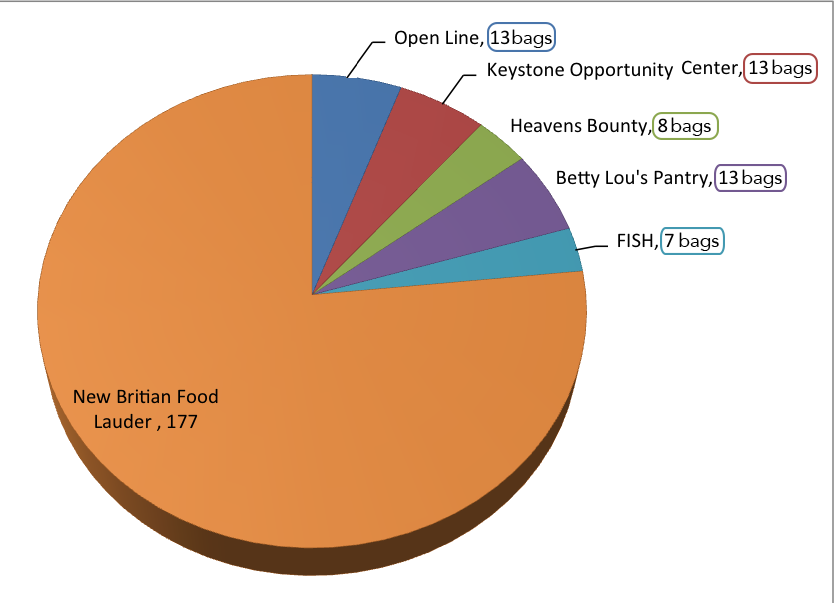
The entire office gathered 1,502 grocery bags of food for various food lauders throughout the Bucks, Montgomery and Lehigh Counties. One of the owners of the Doylestown office graciously matched every bag gathered with $2.00 each for a total donation of $3,531.00.

 NextKeyMove